Lecture notes · Oct 2024
Value function Iteration methods
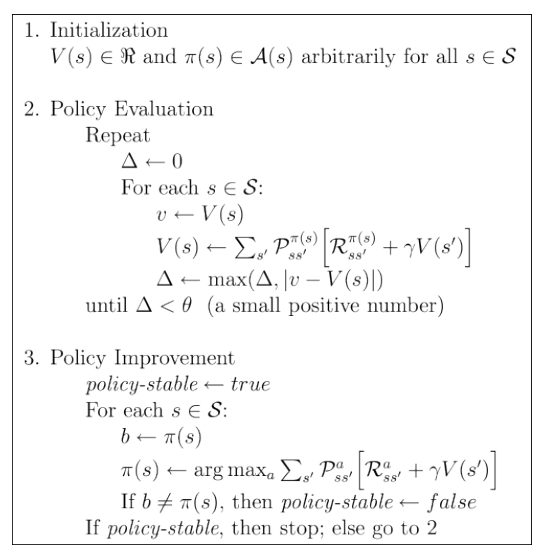
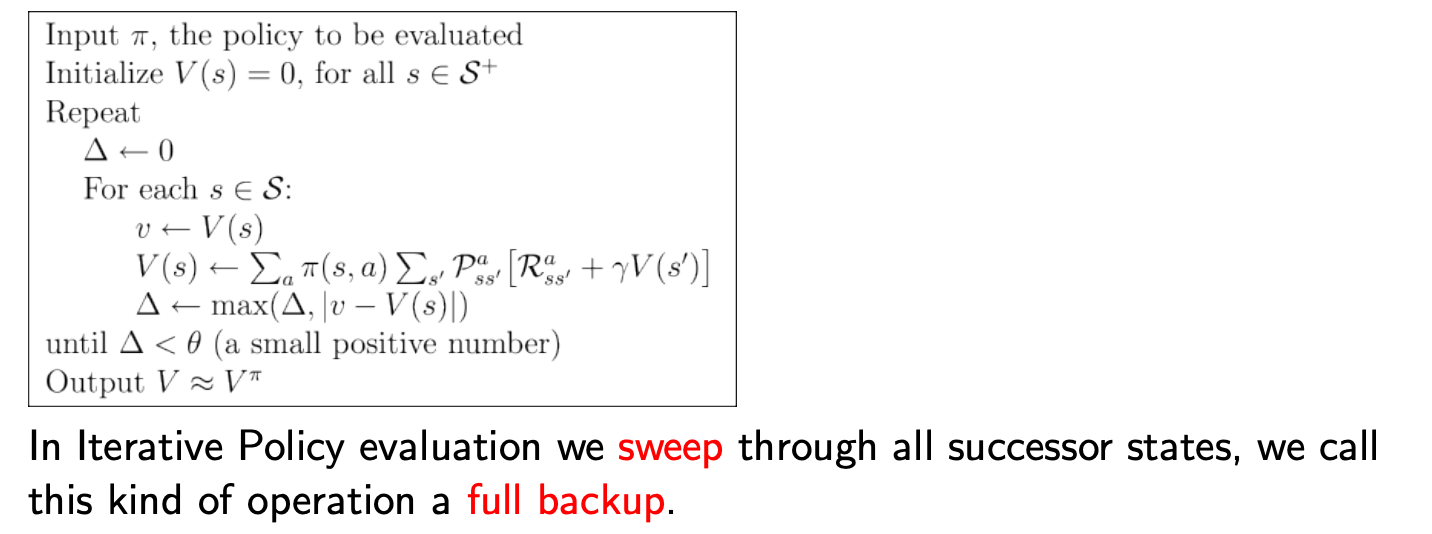
We systematically apply Bellman’s equation over and over again to obtain better estimates for the value function iteratively. Each iteration provides successively better approximations to the solution. A typical stopping condition for iterative policy evaluation is to measure by how little the largest change in value function was between two iteration steps and set a cut off threshold.
Value Iteration
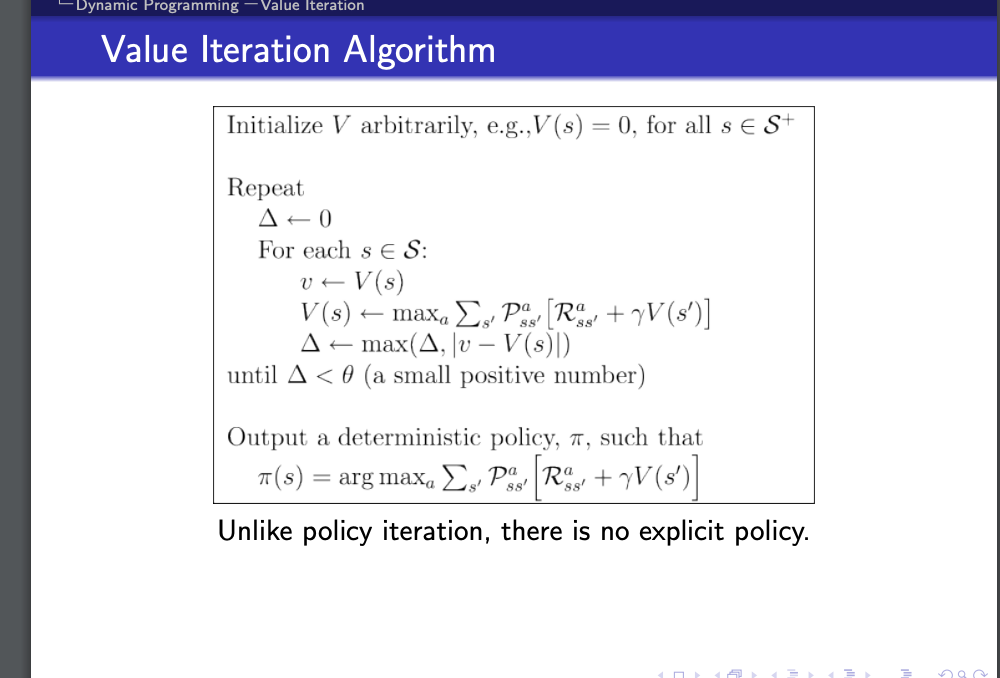
The Bellman Optimality Equation (Henceforth, BOE) is a so called fixed point equation.
As a result, we can start with some arbitrary value function V(…) and apply the right hand side of the BOE to said V(…) to get a new value function V’(…). Thus, the right hand side of the BOE defines an operator L on the space of value functions. The Bellman optimality equation states that the optimal value function is a fixed point . A simple process to find a fixed point of K is as follows, Begin with any value function, apply K to it again and again until . The process is guarenteed to converge to a unique limit since K is a contraction
Policy Iteration